No water at all
The issue may be the pump, controls, wiring, pressure switch, tank, or well condition.
If the pump is inside the well and the home has no water, low pressure, or repeated electrical trips, request review from a local well pump technician before assuming the pump itself must be replaced.
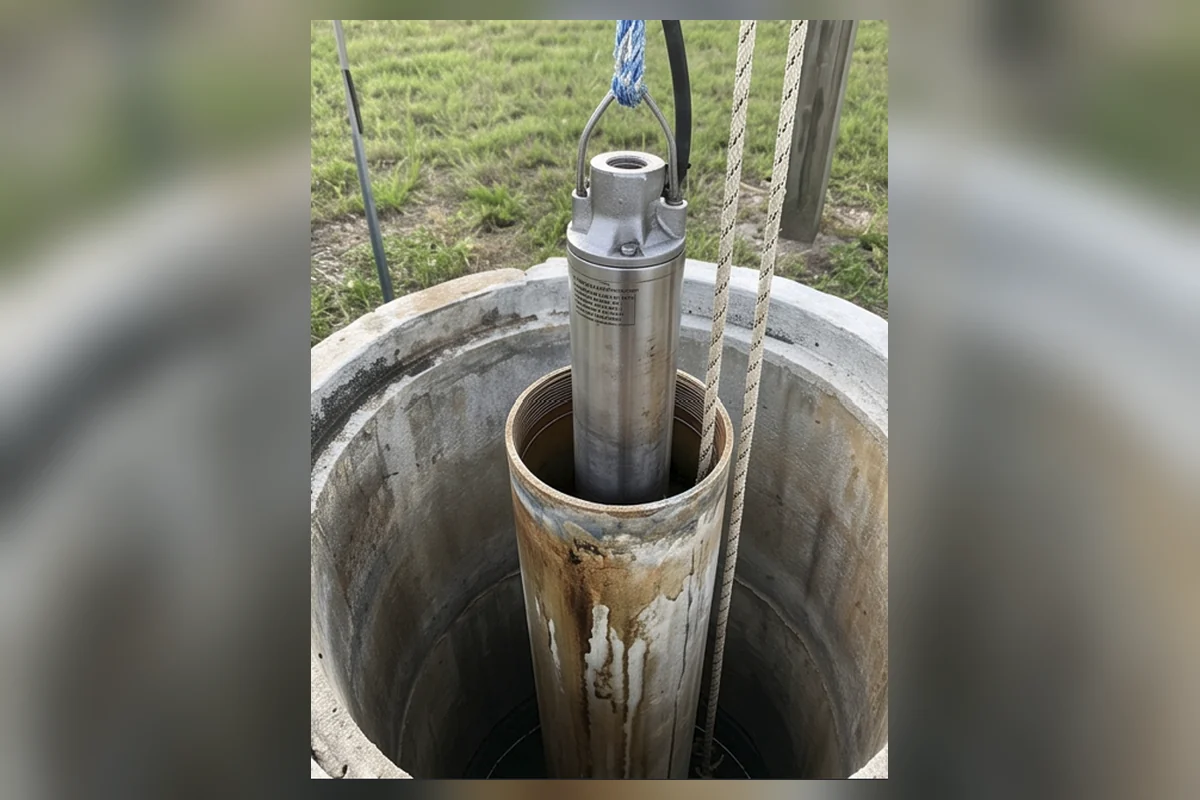
The issue may be the pump, controls, wiring, pressure switch, tank, or well condition.
Electrical symptoms should be handled carefully by a qualified technician.
If the pump has failed, the technician can review depth, size, wiring, and system needs before quoting replacement.
A submersible pump sits below the water level inside the well, but several serviceable components remain above ground. A tripped breaker, damaged pressure switch, failed control box, loose connection, pressure-tank problem, leak, or low-water condition can all interrupt delivery even when the pump itself is not the first part that failed.
A useful diagnosis checks power, controls, pressure behavior, visible plumbing, and well-system history before recommending that the pump be pulled. That helps separate a smaller electrical or pressure-system repair from a pump or drop-pipe replacement.
If the failure is in a pressure switch, control box, sensor, wiring connection, or pressure tank, the repair may not require removing the pump from the well.
Control box symptomsLow output, damaged wiring, a worn motor, a broken drop pipe, or a pump that cannot build pressure may require down-well work after testing.
No-water diagnosisWell depth, pump setting, recovery, household demand, irrigation demand, tank setup, voltage, and pipe condition matter when selecting replacement equipment.
Replacement request guideA repeated trip can indicate a motor, cable, control-box, connection, or moisture problem. Leave energized covers closed, keep away from wet electrical equipment, and avoid repeatedly resetting the circuit. Record what happened and request qualified review.