Pump will not start
Possible causes include no power, a blocked sensing path, burned contacts, control trouble, wiring faults, or motor failure.
A pressure switch tells the pump when to turn on and off. If the switch, gauge, pressure tank, or wiring has a problem, the pump may short cycle, fail to start, or fail to build pressure.
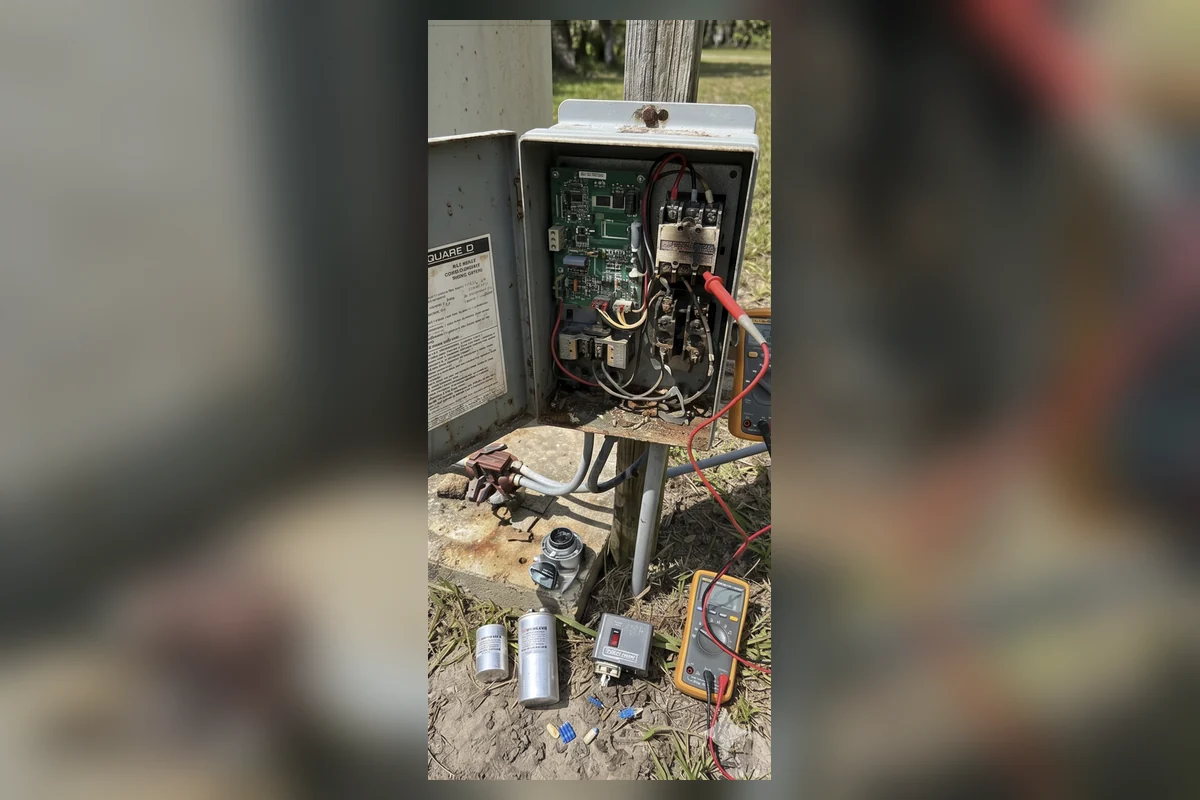
The pressure switch tells a conventional well pump when to start and stop, but repeated clicking does not automatically mean the switch is the only failed part. A waterlogged tank, clogged sensing port, loose connection, inaccurate gauge, leak, low voltage, or pump that cannot reach cut-out pressure can change switch behavior.
Record the gauge reading where the pump starts and where it stops, if it does so normally. If contacts chatter, wiring is discolored, equipment is wet, or the breaker trips, turn the system off and keep the cover closed. Pressure switches combine electricity and pressurized plumbing and should not be bypassed.
Possible causes include no power, a blocked sensing path, burned contacts, control trouble, wiring faults, or motor failure.
The system may have a leak, inaccurate sensing, incorrect settings, inadequate pump output, or a source-water problem.
Rapid switching can involve tank air volume, unstable pressure, a poor electrical connection, or a restricted pressure port.
The switch should be evaluated with an accurate gauge and the pressure tank in known condition. Testing should establish whether voltage reaches the switch, contacts conduct safely, the sensing port transmits system pressure, and the pump reaches the intended start and stop points. A replacement switch will not solve a leak, failed tank, weak pump, or wiring fault. The final recommendation should identify which measurement supports the proposed repair.