Pump will not prime
Loss of prime can point to a suction leak, valve issue, worn parts, or well condition.
If an above-ground jet pump loses prime, runs without building pressure, cycles quickly, or leaves the home with no water, request review from a local well pump technician.
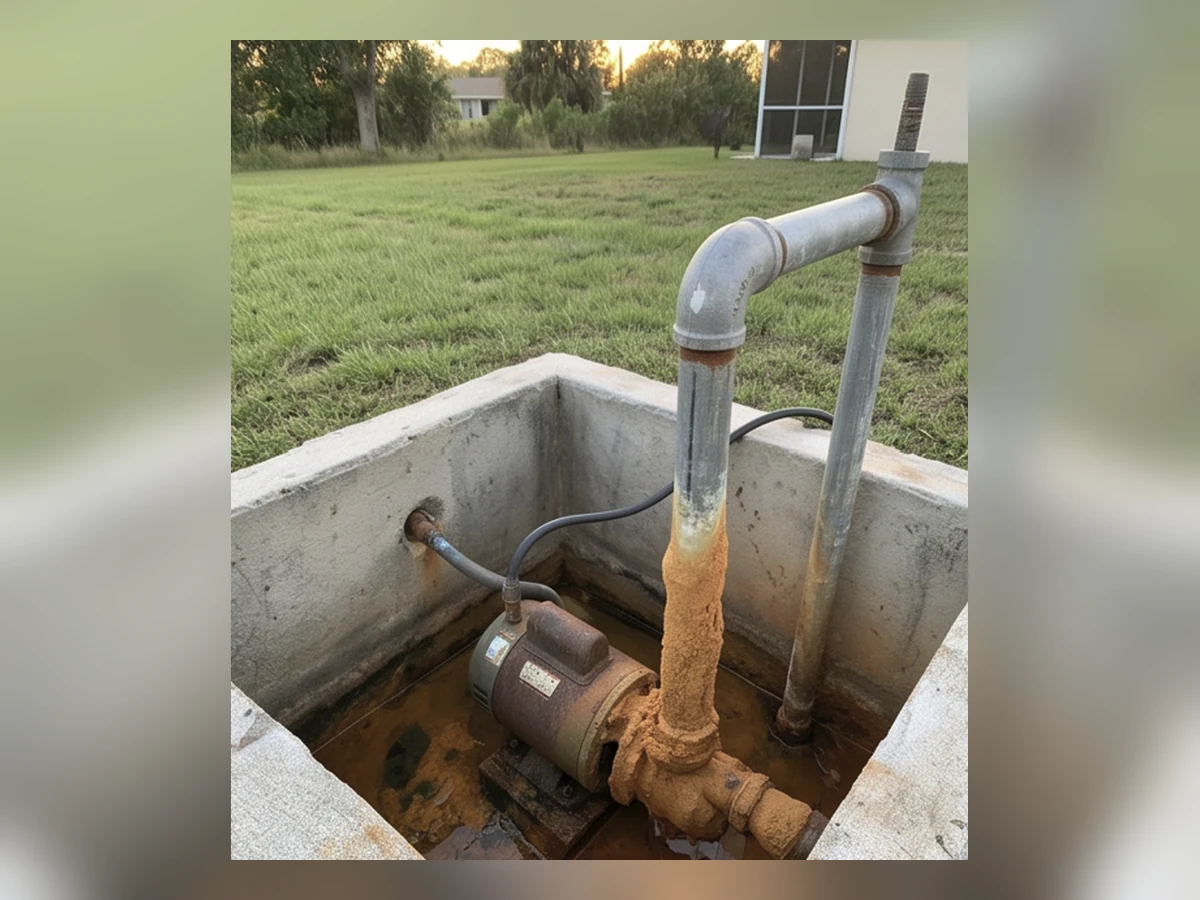
Loss of prime can point to a suction leak, valve issue, worn parts, or well condition.
Weak pressure may involve the pump, switch, tank, filter, lines, or well output.
Noisy operation, overheating, or repeated cycling should be reviewed before the pump fails completely.
A jet pump depends on an airtight suction path and enough retained water to establish prime. A small air leak at a fitting, failed foot or check valve, damaged suction pipe, low source-water condition, or worn pump component can let the motor run while the pressure gauge barely moves.
Report whether the pump lost water after sitting unused, after a power outage, or during heavy irrigation. Mention if it repeatedly needs priming, cycles normally but cannot reach shutoff pressure, becomes unusually hot, or produces air at faucets. Repeatedly running a jet pump dry can damage seals and internal components.
The suction side may be admitting air or allowing water to drain back through a valve, fitting, or pipe.
Pump wear, suction restriction, air leakage, an open demand, or insufficient water supply can limit pressure.
If pressure still feels weak, compare gauge behavior, tank performance, filters, and flow at multiple fixtures.
A useful service conclusion identifies whether the motor starts correctly, the suction line remains airtight, the system holds prime between cycles, and the pump can reach its normal pressure range under demand. It should also distinguish a pump-side problem from an inadequate water source, clogged intake, failed valve, or leak beyond the pump.